
Brass vs Stainless Steel vs Sterling Silver: Which Metal Should You Choose for Your Jewelry Brand?
Choosing the right metal is an important decision when developing a jewelry collection. The material affects not only the appearance and durability of a product, but also its production cost, retail positioning, maintenance requirements, and target customers.
For fashion brands, retailers, and jewelry wholesalers, three popular options are brass, stainless steel, and sterling silver. Each has different advantages, making it suitable for different product lines and market segments.
In this guide, we compare these three metals to help you choose the right material for your jewelry brand.
1. Brass Jewelry: Flexible Designs at an Accessible Cost
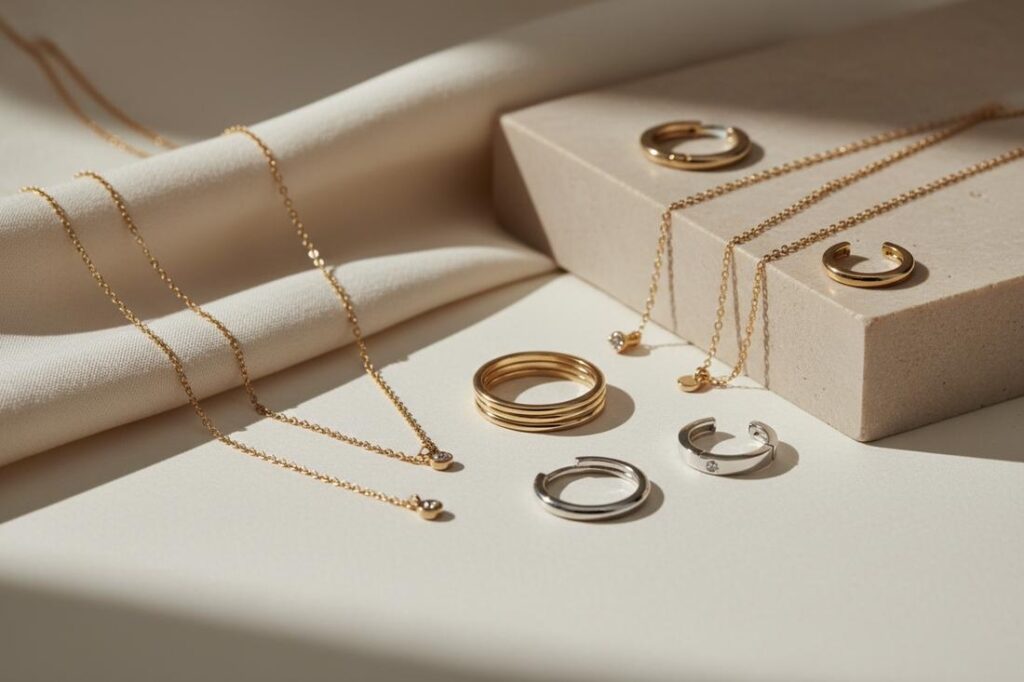
Brass is an alloy primarily made from copper and zinc. It is widely used in fashion jewelry because it offers a warm, gold-like appearance and works well with different shapes and surface finishes.
Learn more about brass.
Advantages of Brass
- Design flexibility: Brass can be shaped into detailed earrings, pendants, rings, and decorative jewelry components.
- Accessible material cost: It can be a practical choice for brands developing fashion jewelry at different price points.
- Versatile finishes: Brass can be polished, textured, or plated to achieve gold-tone, silver-tone, and other decorative finishes.
What Should Buyers Consider?
Brass can tarnish or change color over time, particularly when exposed to moisture, sweat, and certain chemicals. Protective coatings and plating may help improve surface performance, but their effectiveness depends on the materials and manufacturing process.
Brass is a good option for fashion jewelry, statement earrings, decorative pendants, and trend-driven collections where design flexibility and cost control are priorities.
Best for: Fashion jewelry brands, seasonal collections, and designs that require detailed shapes or decorative finishes.
2. Stainless Steel Jewelry: Durability for Everyday Wear
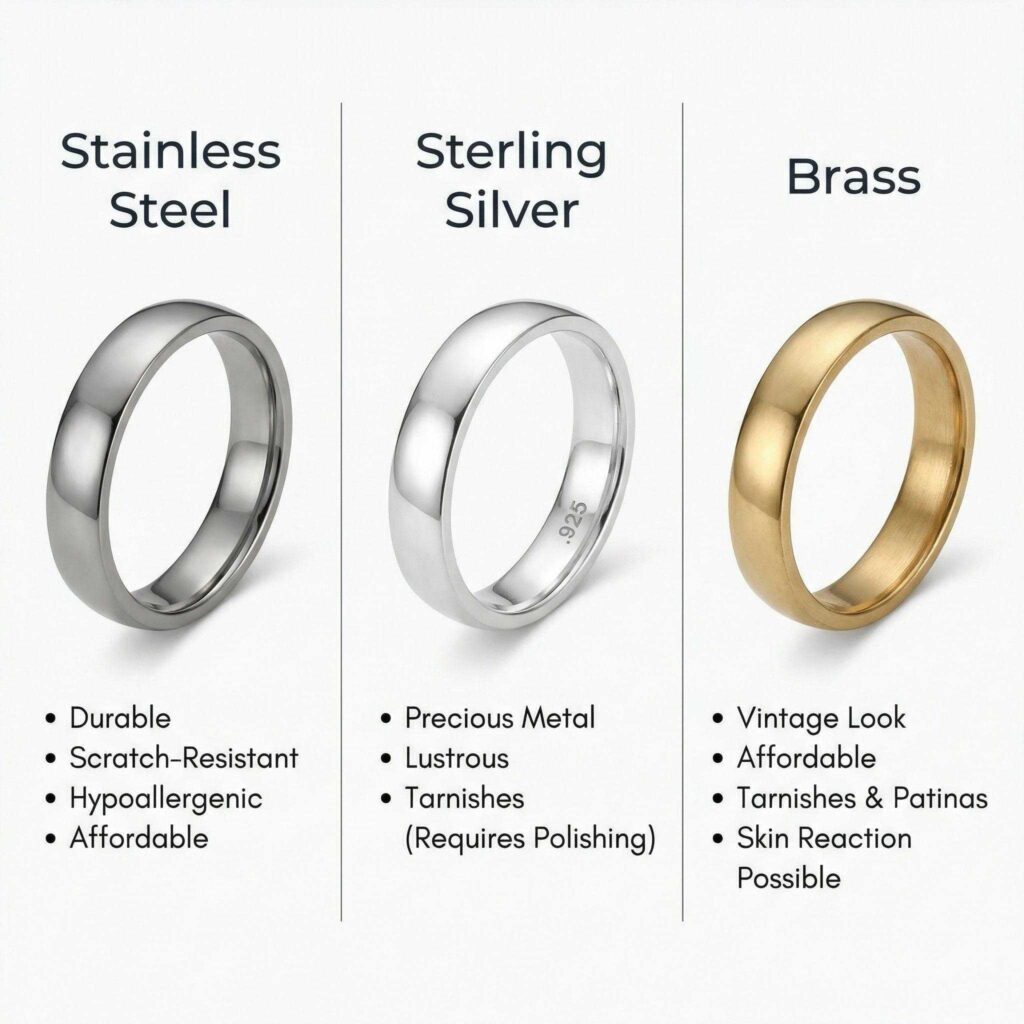
Stainless steel is an iron-based alloy containing chromium, which helps it resist corrosion. Its durability and relatively low maintenance requirements make it a popular option for everyday jewelry.
Learn more about stainless steel.
Advantages of Stainless Steel
- Corrosion resistance: Stainless steel generally performs well against moisture and everyday exposure, although resistance varies by grade and conditions.
- Durability: It is suitable for products that need to withstand regular wear.
- Modern appearance: Its natural silver-tone finish works well with minimalist, contemporary, and unisex jewelry designs.
- Practical maintenance: It typically requires less frequent polishing than sterling silver.
What Should Buyers Consider?
Not all stainless steel grades have identical properties. Buyers should confirm the grade used and whether additional coatings or surface treatments are applied.
Stainless steel may contain nickel, so it should not automatically be described as nickel-free or hypoallergenic. Brands targeting customers with sensitive skin should request material specifications and appropriate compliance documentation.
For gold-tone stainless steel jewelry, buyers should also evaluate the coating method, color consistency, and wear resistance.
Best for: Everyday necklaces, bracelets, rings, minimalist collections, and brands prioritizing durability and accessible pricing.
3. Sterling Silver Jewelry: A Premium, Precious-Metal Option
Sterling silver contains 92.5% silver, with the remaining 7.5% consisting of other metals. It is commonly marked “925” to indicate its silver content. The definition is explained in the U.S. Federal Trade Commission’s jewelry guidance.
You can also learn more about sterling silver.
Advantages of Sterling Silver
- Precious-metal positioning: Sterling silver can support a premium product story and a higher-value jewelry collection.
- Classic appearance: Its bright finish suits timeless, minimalist, and sophisticated designs.
- Craftsmanship appeal: It works well for detailed jewelry and collections where material composition is an important selling point.
What Should Buyers Consider?
Sterling silver can tarnish when exposed to air and certain environmental substances. Regular cleaning and appropriate storage help maintain its appearance.
Its precious-metal content also generally results in higher material costs than many fashion-jewelry alternatives. Brands should account for silver prices, manufacturing complexity, finishing, and packaging when calculating product costs.
Best for: Premium fashion jewelry, gift collections, timeless designs, and brands targeting customers who value precious-metal content.
4. Brass vs Stainless Steel vs Sterling Silver: Key Differences
| Comparison | Brass | Stainless Steel | Sterling Silver |
|---|---|---|---|
| Material positioning | Fashion jewelry | Durable everyday jewelry | Precious-metal jewelry |
| Relative material cost | Generally lower | Generally accessible | Generally higher |
| Corrosion and tarnish | Can tarnish | Generally corrosion-resistant | Can tarnish |
| Design flexibility | Excellent for decorative shapes | Suitable for many modern designs | Suitable for detailed and classic designs |
| Maintenance | Depends on finish and coating | Usually low | Requires periodic care |
| Common applications | Statement earrings, pendants | Everyday rings, chains, bracelets | Premium earrings, necklaces, rings |
Note: This is a general comparison. Actual costs, performance, and suitability depend on the specific alloy, product design, manufacturing process, and surface treatment.
5. How to Choose the Right Metal for Your Jewelry Brand
The best material depends on your product strategy rather than simply choosing the most expensive or durable option.
Consider Your Target Customers
If your customers prioritize trend-driven designs and accessible retail prices, brass may be worth considering. If they want durable everyday accessories, stainless steel can be a strong option. If precious-metal content and premium positioning are central to your brand, sterling silver may be more suitable.
Calculate the Total Product Cost
Material cost is only one part of the final price. Also consider labor, plating, polishing, quality control, packaging, shipping, and expected product returns.
Confirm Quality Requirements Before Production
Before placing a bulk order, ask your manufacturer about material grades, plating specifications, sample approval, quality inspection, and relevant market compliance requirements.
For jewelry intended for different international markets, confirm the applicable chemical and metal-content restrictions rather than assuming one specification meets every market’s requirements.
Conclusion
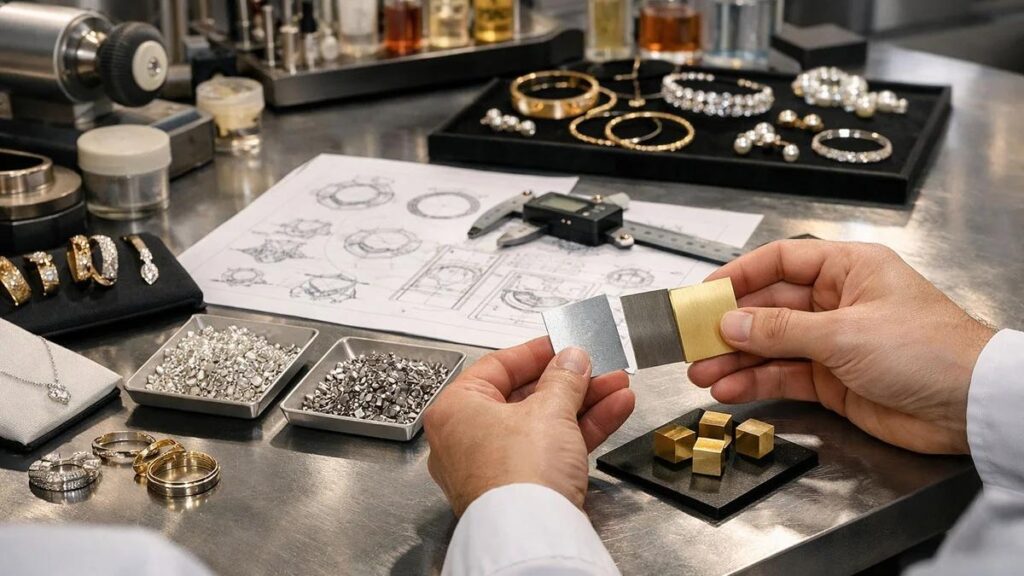
Brass, stainless steel, and sterling silver each serve different purposes in jewelry manufacturing. Brass offers design flexibility and accessible pricing, stainless steel is a practical choice for durable everyday jewelry, and sterling silver supports collections built around precious-metal value.
For jewelry brands, the smartest choice is the material that matches your target customers, design requirements, price positioning, and quality expectations.
Working with an experienced custom jewelry manufacturer can help you evaluate material options, develop samples, and refine your specifications before moving into bulk production.
Related Posts
The Ultimate Sourcing Guide for 2026 Fashion Accessories: How to Build a Viral Brand with the Yiwu Supply Chain
From Viral Hits to Brand Equity: Deep Reconstruction of the Fashion Accessories Supply Chain