How to Vet a Jewelry Manufacturer: 10 Questions to Ask Before You Place an Order
Choosing the right jewelry manufacturer is an important step for fashion brands, retailers, and wholesalers. A reliable manufacturing partner can help you develop new designs, maintain product quality, manage production costs, and support your business as it grows.
However, not every jewelry supplier offers the same manufacturing capabilities, customization options, or quality standards. Before placing an order, it is important to understand how a manufacturer works and whether its services match your business requirements.
Whether you are developing a new jewelry collection or looking for a long-term OEM/ODM partner, here are 10 important questions to ask before making your decision.
1. What Types of Jewelry Do You Manufacture?
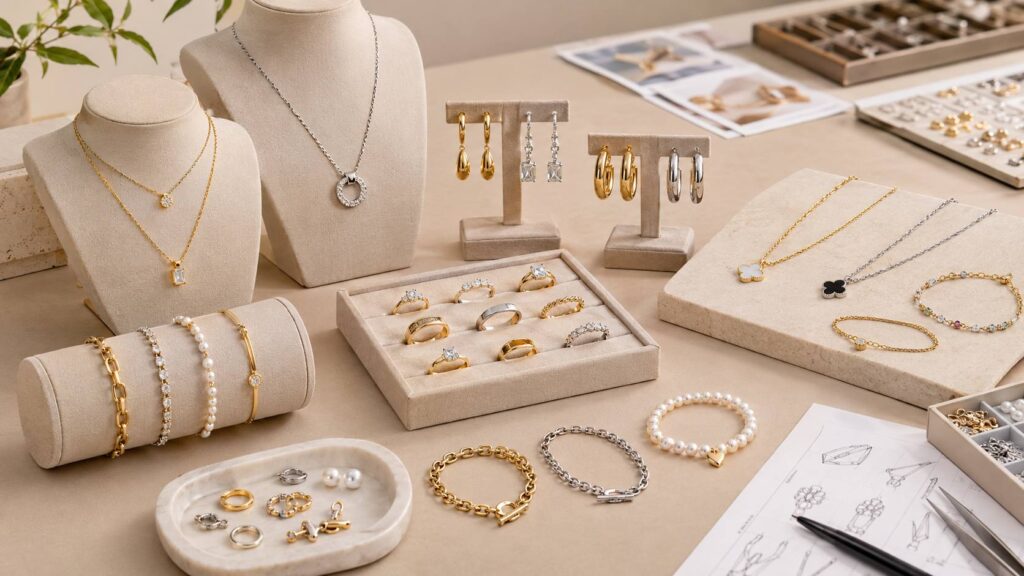
Start by understanding the manufacturer’s product capabilities.
Some manufacturers specialize in fashion jewelry, while others focus on precious metals, fine jewelry, or specific product categories such as necklaces, bracelets, earrings, and rings.
Ask whether they have experience producing the types of jewelry you need.
You should also check whether they can work with different materials, including brass, stainless steel, zinc alloy, and sterling silver.
A manufacturer with relevant product experience may better understand your design requirements, finishing expectations, and production challenges.
2. Do You Offer OEM and ODM Jewelry Manufacturing?
OEM and ODM services provide different levels of customization.
OEM (Original Equipment Manufacturer) generally refers to manufacturing products according to a customer’s specifications.
ODM (Original Design Manufacturer) involves providing design or product development capabilities alongside manufacturing.
Ask whether the manufacturer can develop products from your existing designs or help create new designs based on your ideas.
You should also clarify which customization options are available, such as materials, colors, dimensions, plating, components, and packaging.
Understanding these capabilities early can help you determine whether the supplier is suitable for your product development plans.
3. What Is Your Minimum Order Quantity (MOQ)?
Minimum order quantity is an important consideration when planning a new jewelry collection.
Ask whether the MOQ applies to each design, color, material, or total order.
For example, a manufacturer may accept a relatively small order for one design but require a larger quantity when different colors or custom components are involved.
You should also confirm whether the MOQ changes for customized products.
Understanding these requirements helps you calculate your initial investment and avoid ordering more inventory than your business needs.
4. Can You Provide Samples Before Bulk Production?
Samples allow you to evaluate a product before committing to a larger order.
Ask whether the manufacturer provides samples based on your design specifications and whether you can review material, size, weight, color, finishing, and packaging.
For custom jewelry, you should also confirm whether the sample represents the actual production process.
If changes are required, ask how revisions are handled and whether additional sample charges apply.
Sample approval should be an important checkpoint before bulk production begins.
<AsyncImageGroup query={[“jewelry manufacturer product development sample rings earrings necklace design samples on workbench”,”jewelry quality inspection close up measuring earrings bracelet metal finish”,”custom jewelry factory production organized jewelry components packaging”]} aspectRatio=”4:3″ layout=”carousel”/>
5. How Do You Control Product Quality?
Quality control helps ensure that finished products meet the agreed specifications.
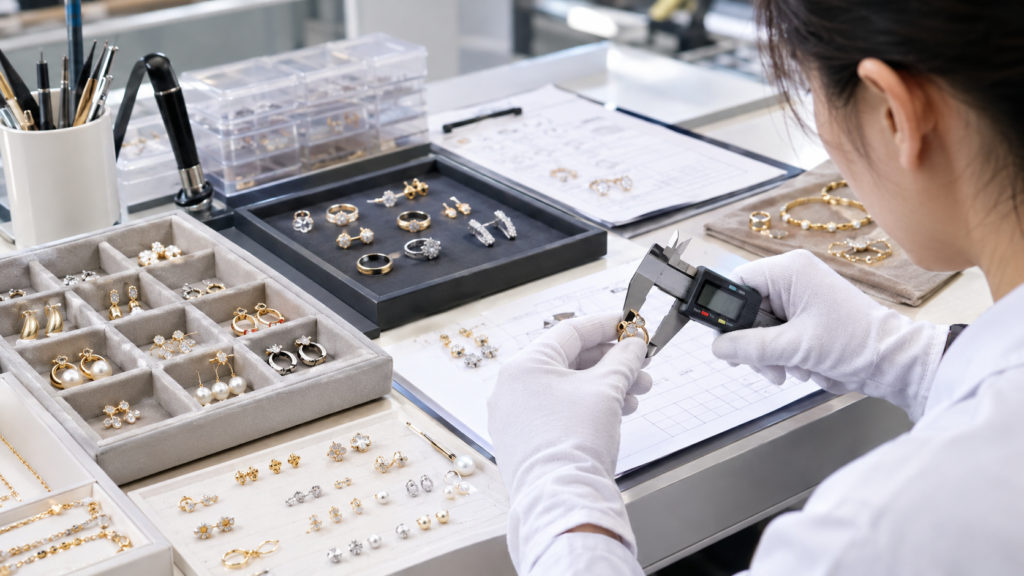
Ask how the manufacturer checks product quality during production and before shipment.
Important areas to discuss include:
- Material consistency and product dimensions
- Color, plating, and surface finishing
- Components, clasps, and connections
- Product appearance and workmanship
- Packaging condition and final inspection
You should also ask whether the manufacturer can provide inspection records, product specifications, or other relevant quality documentation.
For jewelry intended for international markets, confirm whether the supplier can support applicable material testing and compliance requirements.
For example, nickel content may be relevant when evaluating jewelry intended for markets with restrictions on nickel release.
Do not assume that a supplier’s general quality claims automatically mean every product meets your requirements.
6. What Materials and Plating Options Are Available?
Material selection affects product appearance, manufacturing cost, and maintenance requirements.
Ask which materials the manufacturer can work with and whether they can provide the specifications for each option.
For plated jewelry, discuss:
- Plating color and finish
- Base metal composition
- Coating specifications
- Surface preparation
- Expected wear conditions
You should also clarify whether the manufacturer can provide material information or test documentation when required.
This is particularly important if your brand has specific requirements for product durability, skin sensitivity, or market compliance.
7. What Is the Production Lead Time?
Production lead time affects inventory planning and product launch schedules.
Ask how long the manufacturer typically needs for sampling, sample revisions, bulk production, and final inspection.
You should also clarify when the production timeline begins.
For example, does it start after the sample is approved, the deposit is received, or all product specifications are confirmed?
For customized products, design complexity, material availability, order quantity, and packaging requirements can affect the schedule.
A clear production timeline helps you coordinate purchasing, marketing, and inventory preparation.
8. Can You Customize Packaging and Branding?
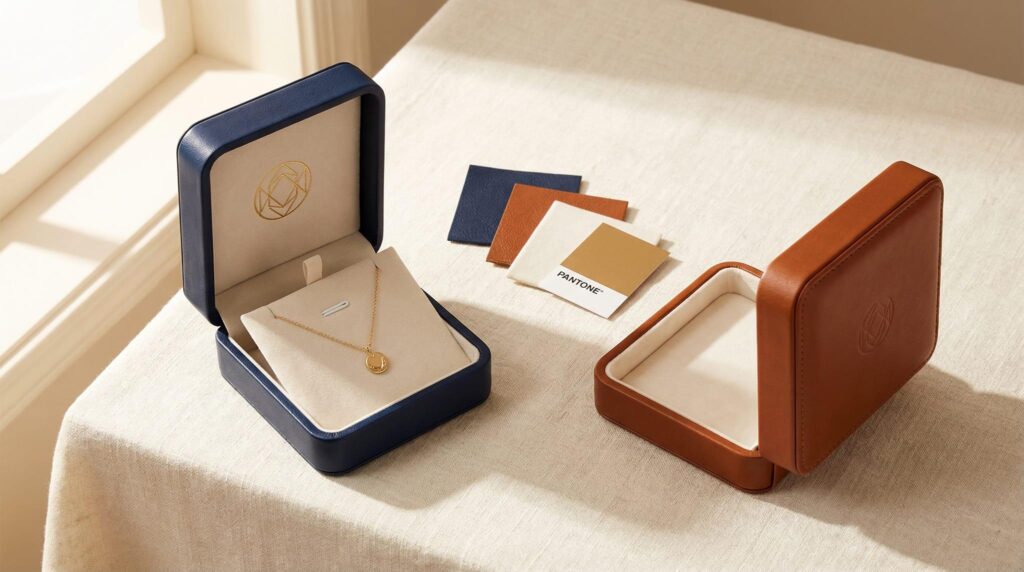
Packaging is an important part of presenting jewelry to customers.
Ask whether the manufacturer offers customized jewelry boxes, display cards, labels, logo printing, and other packaging options.
You should also confirm whether packaging customization has separate MOQ requirements.
If your business sells through retail stores or e-commerce platforms, discuss packaging dimensions, product protection, branding requirements, and shipping preparation.
A manufacturer that can coordinate both jewelry production and packaging may simplify your product development process.
9. Can You Protect My Designs and Confidential Information?
For brands developing original jewelry designs, intellectual property protection is an important consideration.
Ask how the manufacturer handles customer drawings, product specifications, design files, and confidential business information.
You may also discuss whether a confidentiality agreement or NDA is appropriate before sharing sensitive design materials.
Clarify how your designs will be used, whether they can be reproduced for other customers, and what contractual protections are available.
The specific protection depends on the agreement, applicable law, and the circumstances of the project.
10. What Are Your Payment Terms and Shipping Arrangements?
Before placing an order, understand the commercial terms.
Ask about:
- Deposit and balance payment requirements
- Accepted payment methods
- Production confirmation procedures
- Shipping options and responsibilities
- Export documentation
- Order changes and cancellation conditions
You should also clarify who is responsible for shipping costs, customs arrangements, and other charges.
For international orders, discuss the applicable delivery terms and responsibilities before confirming the purchase.
Clear payment and shipping arrangements help reduce misunderstandings during the ordering process.
Conclusion
Finding the right jewelry manufacturer involves more than comparing prices.
A suitable supplier should understand your product requirements, provide clear manufacturing information, support customization, and communicate effectively throughout the production process.
Before placing an order, take the time to evaluate the manufacturer’s product experience, MOQ, sampling process, quality control, materials, lead time, packaging, design protection, and commercial terms.
These questions can help you make a more informed decision and establish a stronger foundation for future production.
