
October 2026 Global Fashion & Retail Industry News: Key Updates for Brands and Buyers
October 2026 brought several important developments across global fashion, retail, jewelry, and e-commerce. Major retailers continued investing in artificial intelligence and supply chain automation, while online marketplaces introduced stricter requirements for product authenticity. The jewelry market also showed changing consumer demand, with growth increasingly concentrated in higher-priced products.
For fashion brands, wholesalers, retailers, and sourcing professionals, these developments offer useful insights into changing retail strategies, product positioning, and the evolving expectations of online buyers.
1. Walmart Introduces AI Shopping Tools for Automated Purchases
Walmart announced new tools on October 21 that allow artificial intelligence agents to search for products and complete transactions on behalf of customers. The retailer introduced Agent Profiles, which enable customers to authorize individual AI agents, track their purchases, and establish spending limits or approval requirements. Walmart also launched the Agent Gateway, allowing AI assistants to connect with Walmart and Sam’s Club systems to search products and complete purchases.
The initiative reflects Walmart’s efforts to adapt to the growing use of AI-powered shopping assistants. It also highlights a potential shift in e-commerce, where customers may increasingly rely on automated systems to discover and purchase products. For online retailers, product information, structured data, availability, and pricing accuracy may become increasingly important as shopping experiences evolve beyond traditional search and browsing.
Walmart launches tools for AI agents to shop for customers

2. Walmart Commits $6 Billion to Supply Chain Automation
Walmart expanded its partnership with Symbotic in a deal involving approximately $6 billion in additional commitments over several years. The agreement covers automation systems across Walmart’s distribution network, including 25 regional distribution centers in the United States, as well as technology development supporting inventory management and fulfillment operations.
The investment demonstrates how large retailers are prioritizing operational efficiency and distribution capacity. Automation can help manage inventory movement, improve storage utilization, and support the growing demands of online retail.
For brands and suppliers, improvements in distribution infrastructure may influence inventory replenishment, delivery expectations, and the ability to serve large retail customers. As major retailers continue to modernize their supply chains, reliable production planning and consistent product availability remain important considerations for manufacturers.
Walmart commits $6 billion to expand Symbotic deal
3. Etsy Updates AI Policies to Strengthen Product Authenticity
Etsy updated its AI-related policies in October, emphasizing craftsmanship and buyer trust. Under the revised listing image requirements, most sellers must include at least one unaltered photograph of the actual product against a real background. Additional AI-assisted images may be used, but they must accurately represent the item customers will receive.
The updated requirements reflect a growing concern across online marketplaces: product images generated or heavily modified by AI may create unrealistic expectations. Etsy’s policy places greater emphasis on authentic product representation and the role of human creativity.
For fashion accessory brands and manufacturers, this development highlights the importance of maintaining accurate product photography. Buyers may expect to see actual samples, material textures, finishes, dimensions, and packaging details before making purchasing decisions.
AI can still support creative development and marketing visuals, but it should not replace genuine product evidence when communicating product specifications or manufacturing quality.
Etsy updates AI use policies to emphasize craftsmanship
4. U.S. Jewelry Sales Continue to Grow, but Demand Shifts
U.S. specialty jewelry retailers continued to report revenue growth in September 2026. According to data from Tenoris reported by JCK, specialty jewelry revenue increased 5.7% year over year, while year-to-date revenue rose 8.5%.
However, the growth was not evenly distributed across product categories. Average spending per item increased, while demand for lower-priced jewelry weakened. Sales of lower-priced jewelry declined by 11%, suggesting that revenue growth was increasingly concentrated at higher price points.
This trend may indicate that consumers are becoming more selective about jewelry purchases. Product value, design differentiation, perceived quality, and brand positioning may play a greater role in purchasing decisions.
For jewelry brands and sourcing teams, the figures suggest that product development should consider both price positioning and customer expectations. A clear product concept, appropriate materials, and consistent quality can help brands develop collections that appeal to their target markets.
U.S. Jewelry Sales Keep Growing As Demand Shifts to Higher Price Points
5. China’s Freshwater Pearl Industry Develops Higher-Tech Products
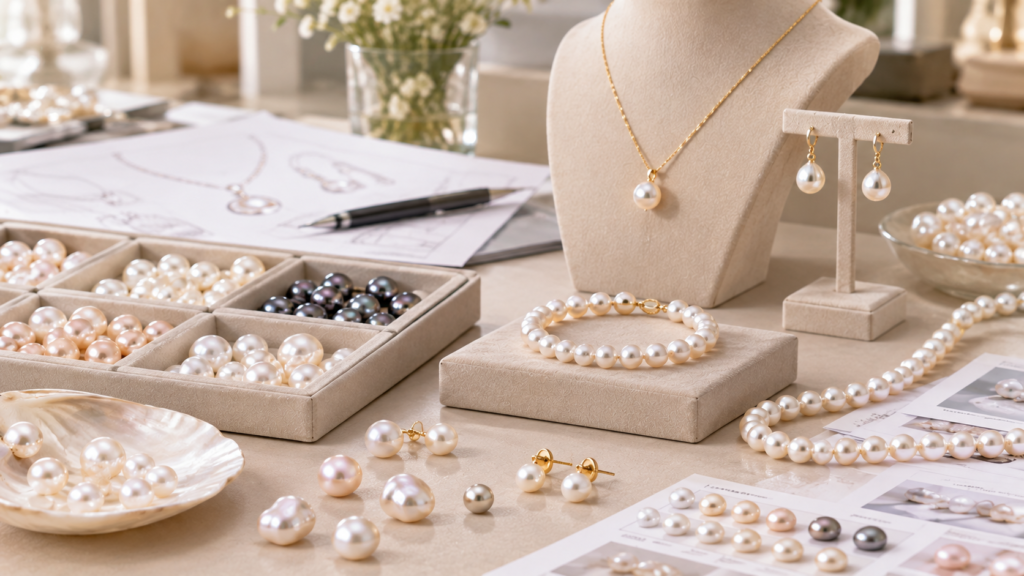
A report published by JCK on October 28 highlighted technological developments in China’s freshwater pearl industry. Pearl producers are using more advanced cultivation techniques, including sensor-monitored ponds and methods designed to influence pearl characteristics.
The development reflects a broader transformation in the pearl industry. China has historically been associated with large-scale freshwater pearl production, but newer techniques may support more differentiated products and higher-value market segments.
For jewelry brands and wholesalers, this development provides an example of how manufacturing and material innovation can create new product opportunities. Instead of competing only on price, suppliers may increasingly differentiate through product characteristics, design possibilities, and quality.
Brands exploring pearl jewelry collections may benefit from paying closer attention to material sourcing, pearl grading, color variations, and the capabilities of individual suppliers.
China’s High-Tech Pearls Have Arrived, But Most U.S. Buyers Haven’t Noticed
6. eBay Announces Workforce Reductions as It Refocuses Operations
eBay confirmed plans to reduce approximately 9% of its global workforce, affecting around 1,000 employees. The October announcement followed another workforce reduction earlier in the year, as the company continued to simplify its operations and redirect resources toward strategic priorities.
The company has been focusing on areas such as collectibles, consumer-to-consumer sales, and pre-owned or refurbished products. These categories have become important parts of its marketplace strategy.
The development illustrates how established e-commerce platforms are reassessing their business structures while responding to changing consumer behavior and competitive pressures.
For sellers and brands operating through online marketplaces, platform strategy remains an important consideration. Changes in marketplace priorities, category focus, and operational resources may influence how sellers approach product selection, channel management, and long-term business planning.
eBay cuts 1K jobs, downsizing for the second time this year
Key Takeaways for Fashion Brands and Buyers
October’s developments highlight several trends shaping the global fashion and retail industry.
AI is becoming more closely integrated with online shopping, while large retailers are investing in automation to improve supply chain operations. At the same time, marketplaces are placing greater emphasis on authentic product representation, and jewelry demand is showing signs of shifting toward higher-value merchandise.
For brands, wholesalers, and sourcing professionals, these changes reinforce the importance of accurate product information, reliable manufacturing partners, differentiated product development, and flexible supply chain planning.
As the industry continues to evolve, businesses that combine product quality, operational efficiency, and a clear understanding of their target customers will be better positioned to respond to changing market conditions.
Related Posts
Brass vs Stainless Steel vs Sterling Silver: Which Metal Should You Choose for Your Jewelry Brand?
The Ultimate Sourcing Guide for 2026 Fashion Accessories: How to Build a Viral Brand with the Yiwu Supply Chain