7 Popular Bag Materials and How to Choose the Right One for Your Brand
Short answer: match the material to three things — your price point, how the bag will actually be used, and the story your brand needs to tell. PU leather, canvas, polyester and jute carry trend-driven entry and mid-tier collections; nylon and coated fabrics win on weight and weather; genuine leather justifies a premium price and a long-life story. The material is a bag’s biggest cost driver and a common cause of returns, so choose it before hardware or lining.
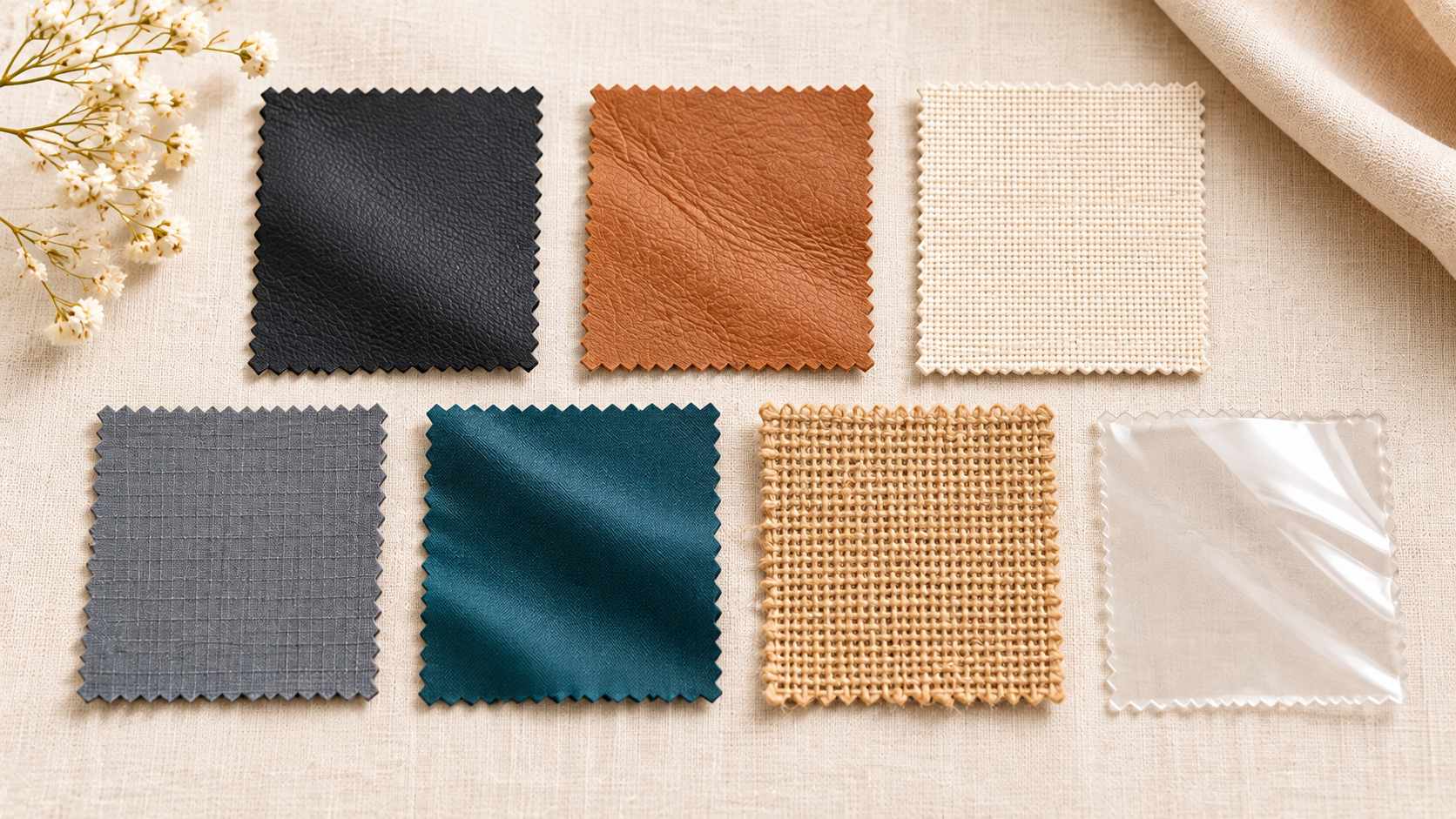 Seven materials, seven different stories on cost, durability and brand fit.
The 7 Popular Bag Materials, Defined
1. PU leather. The default of fashion bags: consistent colour and grain, easy to customise in finish and embossing, far cheaper than hide. Quality varies with coating thickness and base fabric, so ask for adhesion and peel tests.
2. Genuine leather. Durable, develops a patina, carries premium pricing. Tannery quality decides everything: Leather Working Group audits tanneries against environmental and chemical standards, and over a third of global finished leather production is assessed under its standard (Leather Working Group).
3. Canvas. Woven cotton or blends with a rugged, casual look that prints and embroiders well. Heavier than synthetics and needs a coating to resist water.
4. Nylon. Lightweight with an excellent strength-to-weight ratio; ripstop weaves and higher deniers resist abrasion and weather. Reads sporty and technical.
5. Polyester. Budget-friendly, holds colour well, available everywhere — increasingly as recycled polyester. If you claim recycled content, get it verified under the Global Recycled Standard (Textile Exchange).
6. Jute and straw. Natural texture with a resort and summer feel, low cost and light. Less durable and sensitive to moisture, best for seasonal capsules.
7. TPU and coated synthetics. Waterproof, wipe-clean and available in clear versions for event-approved bags. Firm hand feel and a modern, minimal look.
Match the Material to Price Point and Use
| Material | Look and feel | Durability | Relative cost | Best for |
|---|---|---|---|---|
| PU leather | Consistent, any colour or grain | Moderate, coating-dependent | Low | Trend collections |
| Genuine leather | Premium, ages with patina | High | High | Premium lines |
| Canvas | Casual, print-friendly | Moderate to high | Low to moderate | Totes, everyday carry |
| Nylon | Light, technical | High, weather-resistant | Moderate | Commuter and travel |
| Polyester | Versatile, colour-stable | Moderate | Low | Volume and entry lines |
| Jute and straw | Natural, textured | Low to moderate | Low | Seasonal and resort |
| TPU and coated | Sleek, glossy or clear | High, waterproof | Moderate | Rain, beach, events |
Entry and trend lines live on finish, print and hardware rather than material cost. Bags used daily or outdoors need nylon, coated canvas or TPU regardless of tier. Premium positioning needs either genuine leather or, for technical brands, high-denier nylon. And if your story is sustainability, certification is what makes the claim credible — browse our custom bags category to see how finish and hardware change the read of the same silhouette.
Product type narrows the choice further. Totes and shopper bags suit canvas and jute; shoulder bags and crossbody styles carry PU or leather well because structure matters more than weight; backpacks and travel styles belong to nylon and coated fabrics; evening clutches can use finer PU finishes. If your range spans several use cases, it is normal to develop with two or three materials in the same round — the silhouettes can still look like one collection.
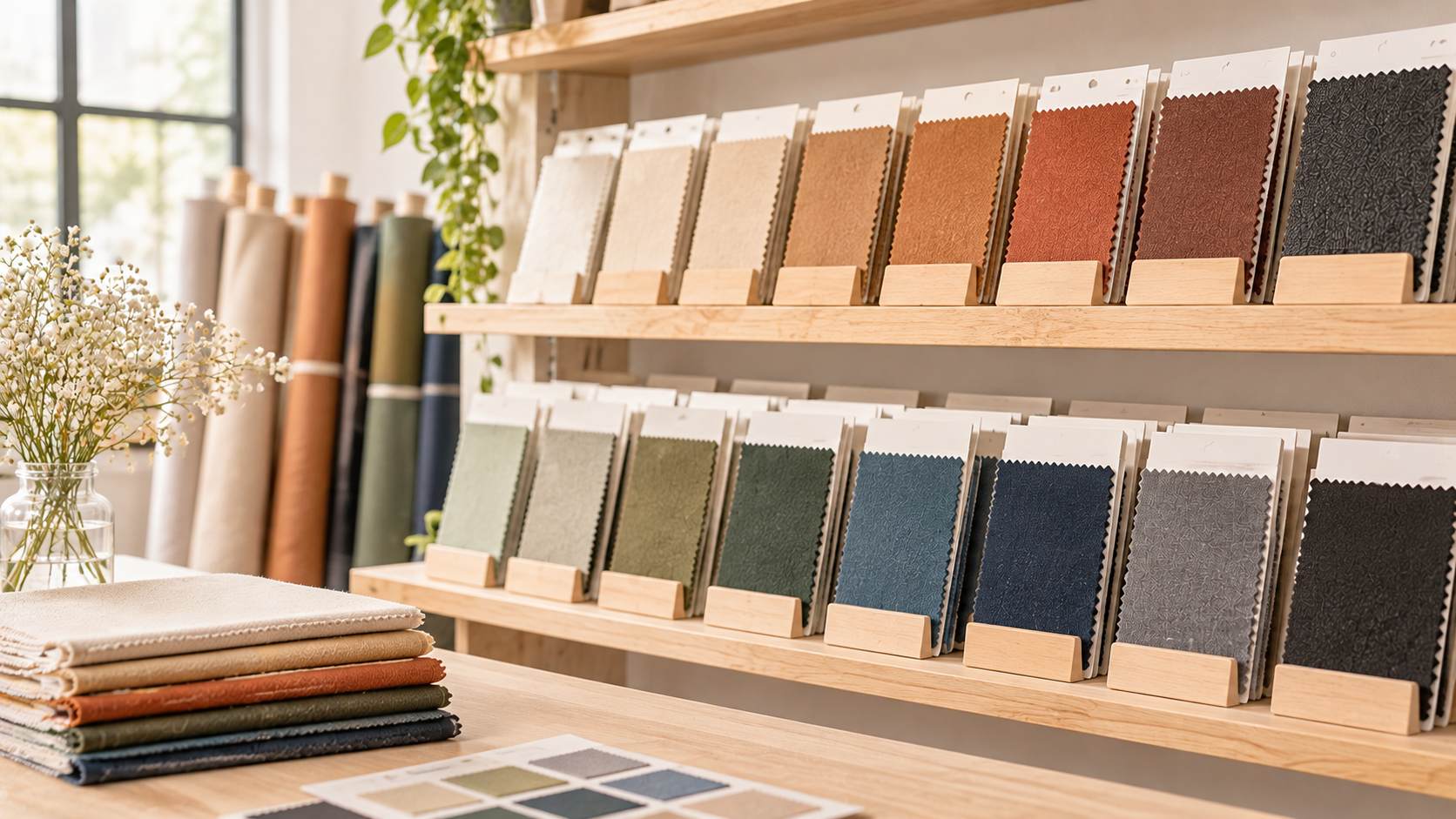 A supplier’s material library is the fastest way to shortlist candidates before sampling.
Quality Checks Before You Commit
Every material fails differently, so your inspection plan should follow the material. For PU, request coating adhesion and peel tests plus colourfastness. For nylon and polyester, check denier, abrasion resistance and seam strength under load. For canvas and jute, test shrinkage and water response. For hardware, ask about salt-spray and zipper cycle tests. On safety, insist on OEKO-TEX STANDARD 100 testing, which screens textiles for more than a thousand harmful substances under globally standardised criteria (OEKO-TEX). Fix the branding method early as well — debossing, foil print and embroidery each behave differently on PU, canvas and leather, and the sample is the only proof. Approve a signed golden sample, then hold in-line inspections against it. Our sourcing guide for fashion accessories places these tests in the wider supplier workflow.
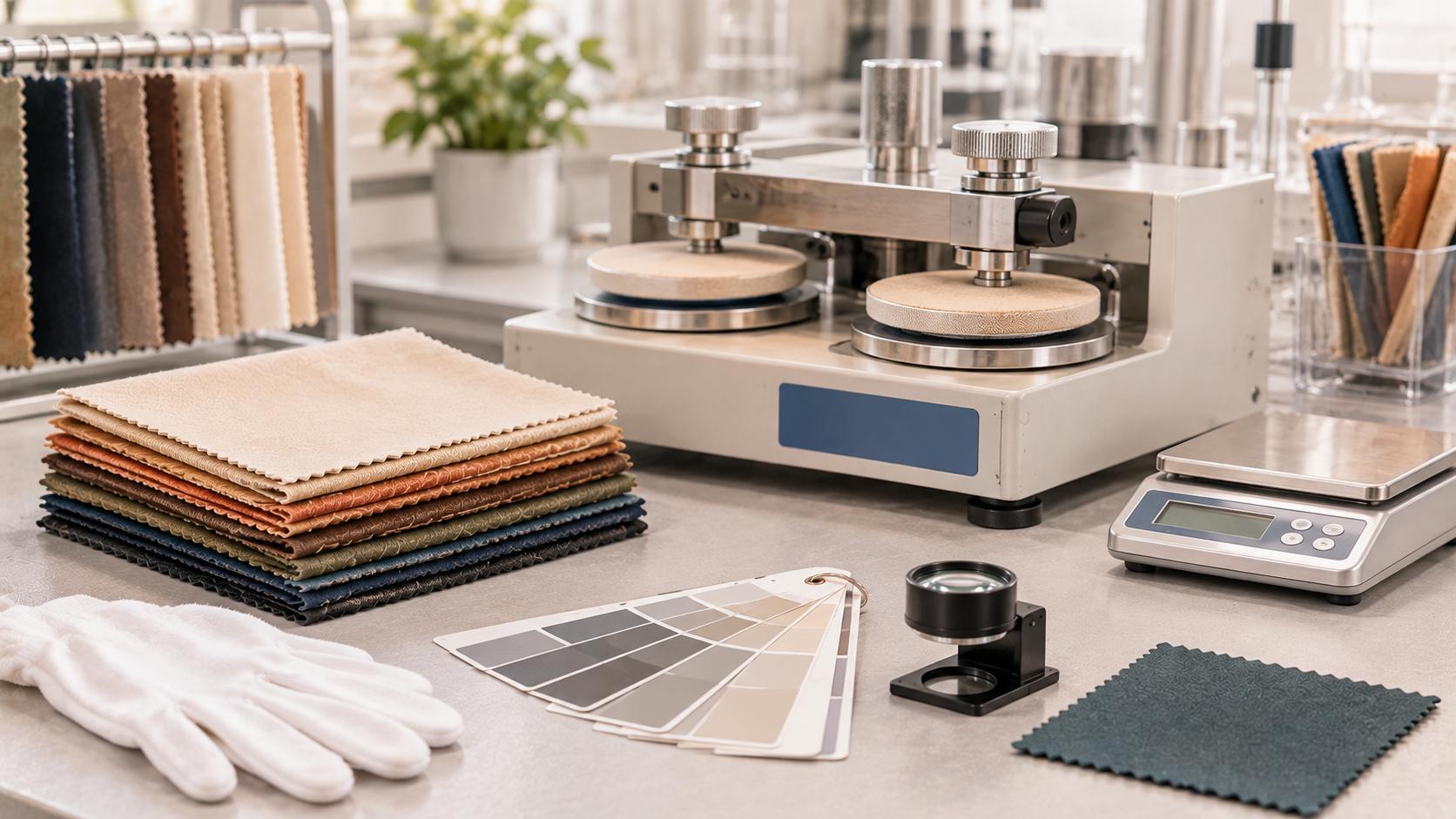 Test the material, not the quotation: adhesion, abrasion, colourfastness and load.
Where Brands Go Wrong When Choosing Materials
Three mistakes come up again and again. First, judging material from a photo or a hand feel alone: a soft PU can look premium in a sample and fail adhesion tests in production. Second, neglecting the parts that are not the outer shell — a cheap lining, thin zips or unplated hardware can sink a bag whose outer material is excellent, so specify lining and trims with the same care. Third, approving a sample cut from one roll and expecting the bulk roll to match; always re-check the bulk material against the golden sample, including colour lot and coating batch.
A Simple Decision Rule
- What retail price must the bag carry? Set the material cost ceiling first; it drives landed cost more than any other component.
- Where and how often will it be used? Daily and outdoor use pushes you to nylon, coated fabrics or leather.
- What story does your brand need to tell? Verified recycled content or audited leather is the story; texture and finish are the supporting cast.
Most collections deliberately mix materials: a PU hero style for trends, a canvas tote for volume, a nylon commuter for loyalty. Choose per product, not per brand. At Dreamwork we develop bags across all seven materials, from swatch selection and sampling through multi-stage production QC.
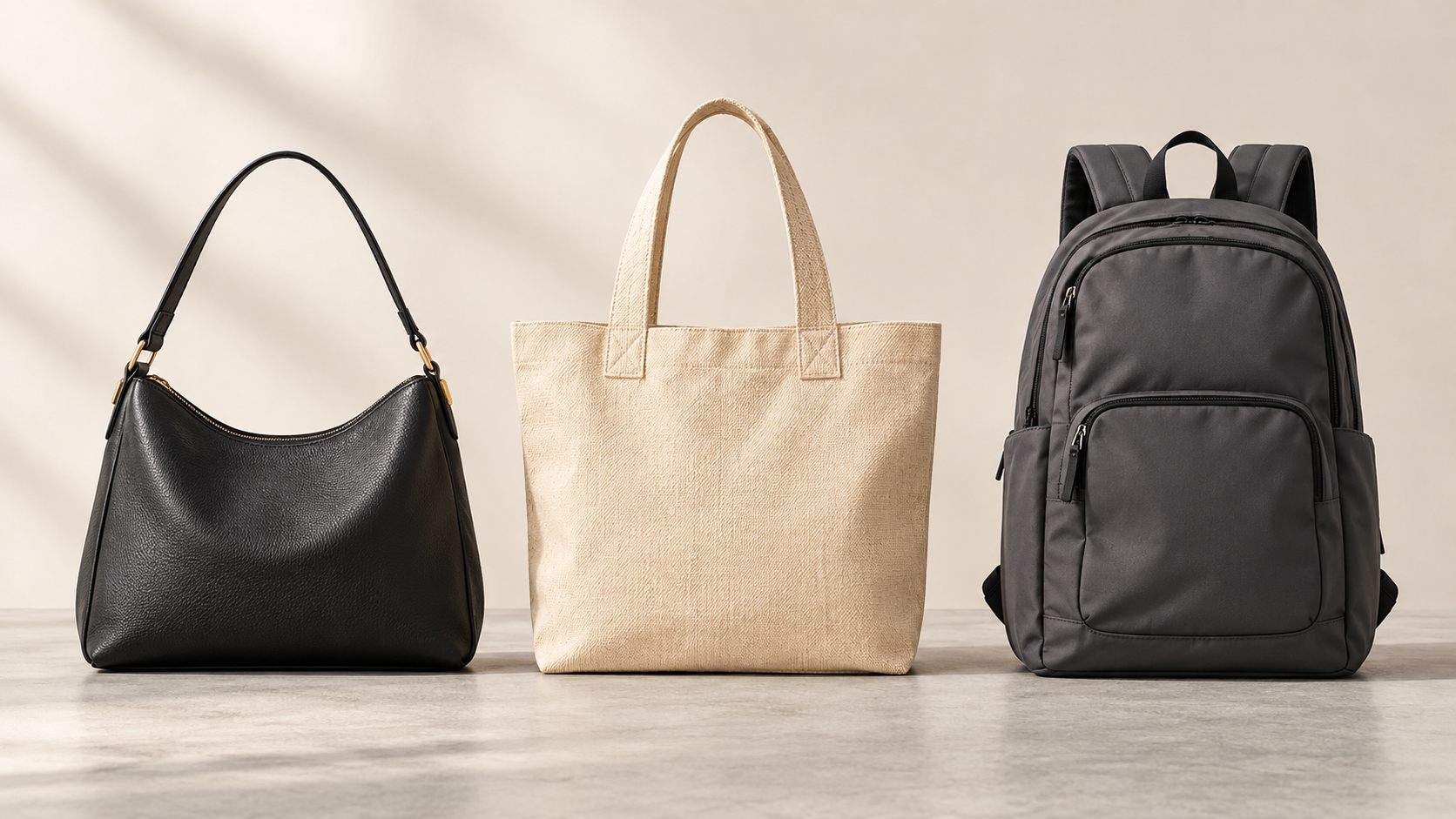 One silhouette, three materials: the same shape reads trend, everyday or technical depending on what it is made of.
Frequently Asked Questions
Is PU leather good quality for bags? It ranges widely. Good PU has a thick coating, a strong base fabric and passed adhesion tests; it will not develop a patina, so set customer expectations accordingly.
Which bag material is the most durable? Full-grain genuine leather and high-denier nylon lead for daily wear. For wet conditions, coated nylon and TPU perform best.
What is the cheapest material that still looks premium? A well-finished PU or a heavy waxed canvas, paired with quality hardware, reads premium at a fraction of leather’s cost.
Does a higher denier always mean a better bag? Higher denier means thicker yarn and usually more abrasion resistance, but coating quality and weave density matter as much; choose the denier for the use case, not the number.
Related Posts
OEM vs ODM vs White Label: Which Manufacturing Model Fits Your Brand Stage?

October 2026 Global Fashion & Retail Industry News: Key Updates for Brands and Buyers