
What Does Custom Jewelry Actually Cost? A Breakdown from Design to Delivery
Short answer: a custom jewelry order is priced in seven layers — design, sampling, tooling, materials, production, finishing and packaging, and landed logistics. There is no single price: the same pendant costs far less per piece at 1,000 units in brass than at 100 in sterling silver. Budget each stage separately, then compare quotations on the same specification. Figures below are planning ranges for fashion jewelry, not quotations.
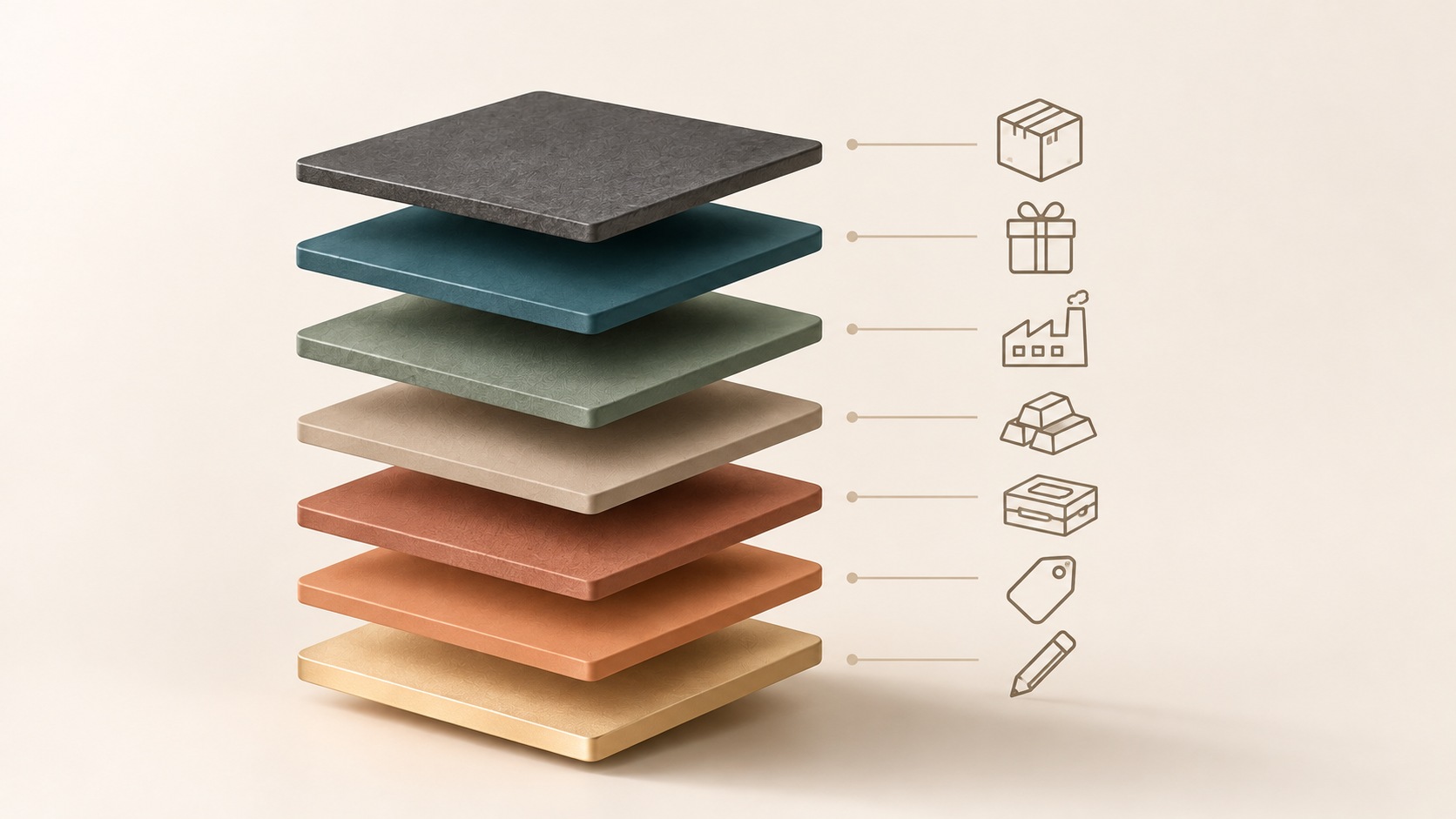 Custom jewelry cost is seven separate line items, not one number on a quotation.
The Seven Cost Lines in a Custom Jewelry Order
Every quote is an accumulation of stages. Understanding which stage a fee belongs to is what lets you compare suppliers fairly — a low unit price often hides tooling or sampling charges elsewhere.
| Stage | What you are paying for | Charged | Typical pattern |
|---|---|---|---|
| 1. Design | Sketches, CAD, technical drawings, material plan | Once per style | Low, or waived at volume |
| 2. Sampling | Prototypes, revisions, courier | Per round | Mid; rises with revisions |
| 3. Tooling | Moulds, dies, casting patterns | One-off | Highest fixed cost |
| 4. Materials | Metal, stones, plating, findings | Per unit | Largest unit-cost driver |
| 5. Production | Casting, polishing, assembly, labour | Per unit | Falls as MOQ rises |
| 6. Finishing and packaging | Plating, e-coat, logo, box, insert | Per unit | Scales with perceived value |
| 7. Landed logistics | Freight, insurance, duties, taxes | Per shipment | Often forgotten in quotes |
The key distinction is fixed versus per-unit. Design, sampling and tooling are paid once; materials, production and packaging repeat with every piece. That is why unit price drops as volume grows — the same fixed cost is spread across more units. A 1,000-piece order costs far less per piece than a 100-piece order of the identical design.
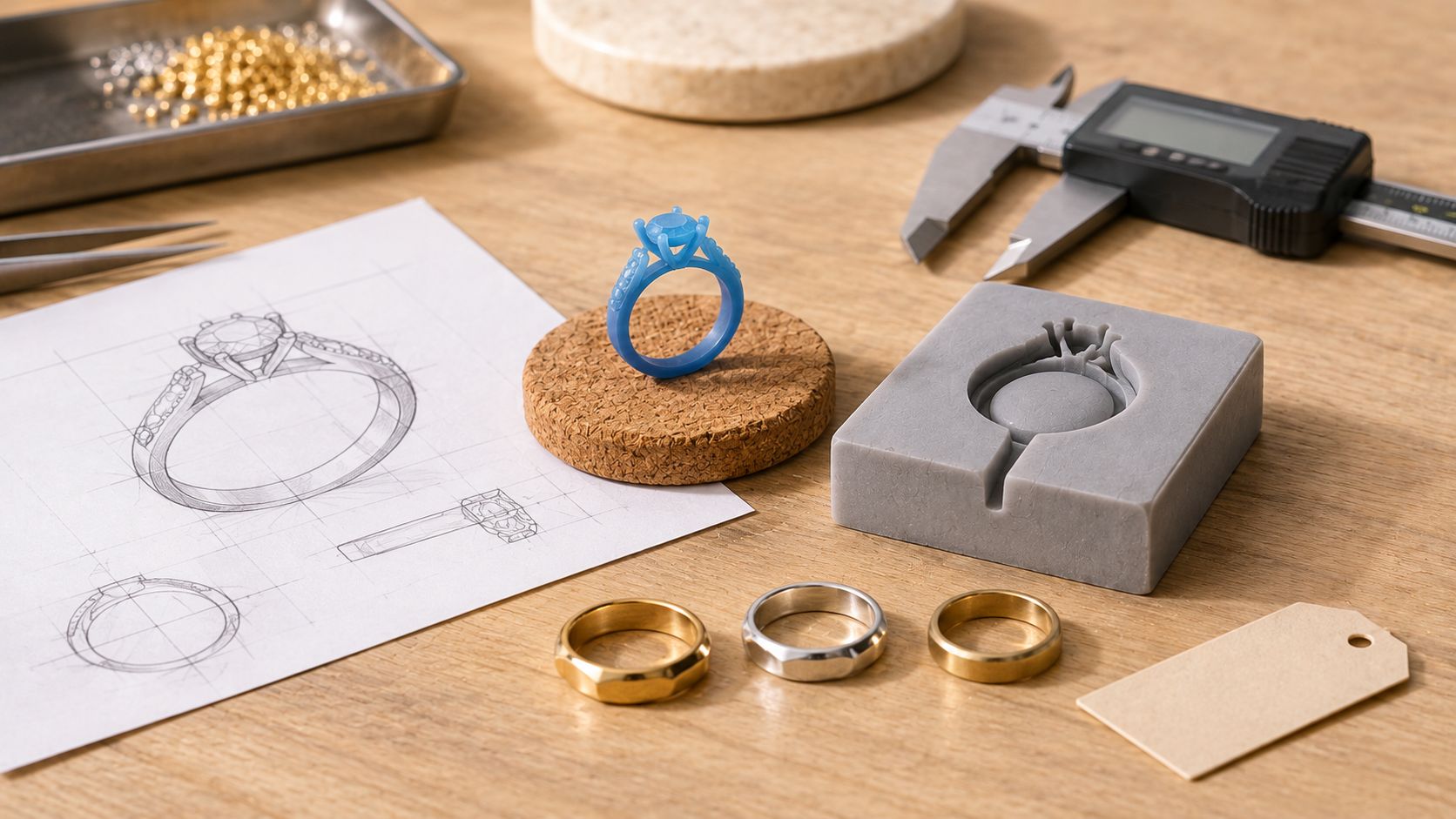 Design, prototypes and tooling are paid once — then amortised across the full order.
Design, Sampling and Tooling: What You Pay Before Production
Most risk cost is incurred before production. Design and CAD turn an idea into a manufacturable drawing; sampling proves proportions, clasp and finish; tooling creates the mould or die that makes repeatable units possible.
Sampling is charged per round because each consumes materials and labour. A clear tech pack — sketch, dimensions, reference sample, metal, plating and stone spec — reduces rounds. Vague briefs are expensive: every revision adds a prototype cycle and a courier shipment.
Tooling is the largest fixed cost and the most misunderstood. A stock design needs no new mould; a fully original casting does. Ask in writing who owns the mould after you pay — a supplier may treat it as their asset unless the quote says otherwise. At Dreamwork we quote tooling separately so brands see exactly what they are buying and can take client-owned tooling elsewhere later.
If you are still choosing between metals at this stage, our comparison of brass, stainless steel and sterling silver explains how each option changes both unit cost and achievable finish.
Materials, Plating and Stones: The Biggest Variable
Material is the largest per-unit line and the most exposed to markets. Precious metal prices move daily: the World Gold Council publishes benchmark prices and historical averages showing how the input can shift (World Gold Council). Brass and stainless steel are far less exposed than solid gold, which is why they dominate trend-led collections.
Plating deserves its own budget line. A thin flash plating and heavy gold plating with a protective e-coat look similar in photos and behave very differently on skin. If you claim durability, specify plating thickness and test it — this is a specification decision, not an afterthought.
Stones and findings are easy to underestimate: grade, setting method and clasp type multiply small differences across thousands of units. A premium clasp can add more than the saving from switching brass to a lighter alloy. Price the complete bill of materials, not the centrepiece.
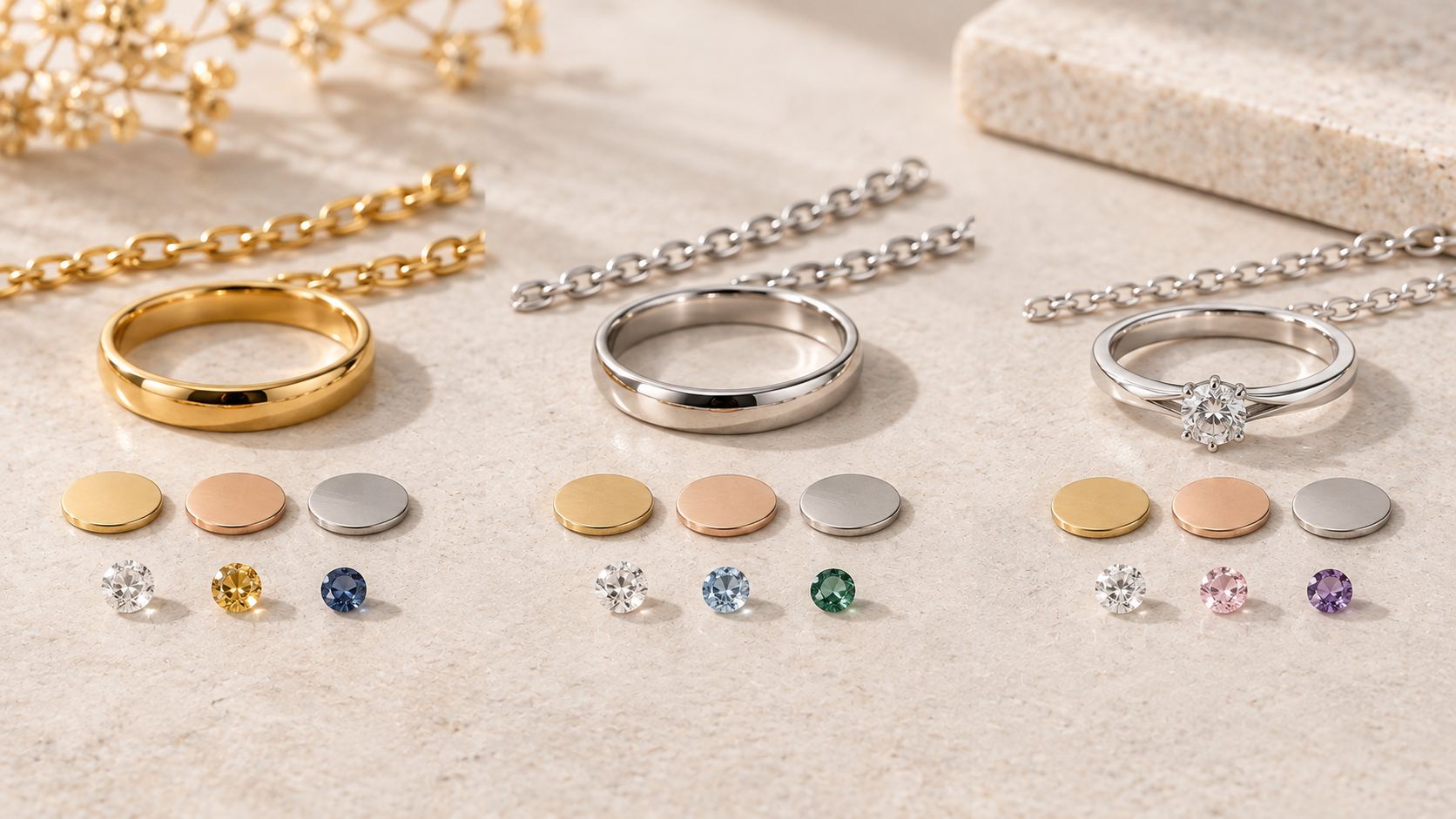 Base metal, plating thickness and stone grade are three separate cost decisions.
Production, Finishing, Packaging and Landed Freight
Production is where MOQ does its work. Casting, polishing, setting, assembly and inspection are partly fixed per batch, so unit cost falls as the batch grows. A supplier quoting a very low MOQ usually charges a higher unit price, and splitting an order across too many colourways raises costs.
Finishing and packaging are where brands spend deliberately. A logo deboss, foil-printed box and fitted insert can lift perceived value more than pricier metal, and are easier to change between seasons. Decide the branding method at sampling: foil, deboss and laser engraving behave differently on each metal, and the sample is the only proof.
Cost does not end at the factory gate. DHL defines landed cost as the total expense of producing, transporting and delivering a product — purchase price, freight, customs duties and taxes, insurance and overheads such as currency conversion and handling (DHL). For imported jewelry, duties, VAT and broker fees can change the comparison between suppliers. Build a landed-cost model before committing to a price that only looks good ex-works.
Cost transparency is a sourcing signal. A supplier who walks through each line is easier to audit than one returning a single number — the questions in our guide to vetting a jewelry manufacturer make a practical checklist.
Where Budgets Actually Break
Three patterns cause overruns. First, comparing unit prices on non-identical specifications — a quote without plating thickness, stone grade or packaging is not comparable. Second, treating samples as decoration rather than specification: the signed golden sample should define finish, tolerance and logo method for bulk inspection. Third, assuming certification is free. Audited responsible-sourcing standards add documentation and audit cost, and the Responsible Jewellery Council sets widely used standards covering human rights, labour, health and safety and product integrity across the jewellery and watch supply chain (Responsible Jewellery Council). If you claim responsibility, budget for the evidence.
A practical rule: fix the specification, then the volume, then ask for the price. Reverse those steps and a reasonable quotation becomes an unworkable budget.
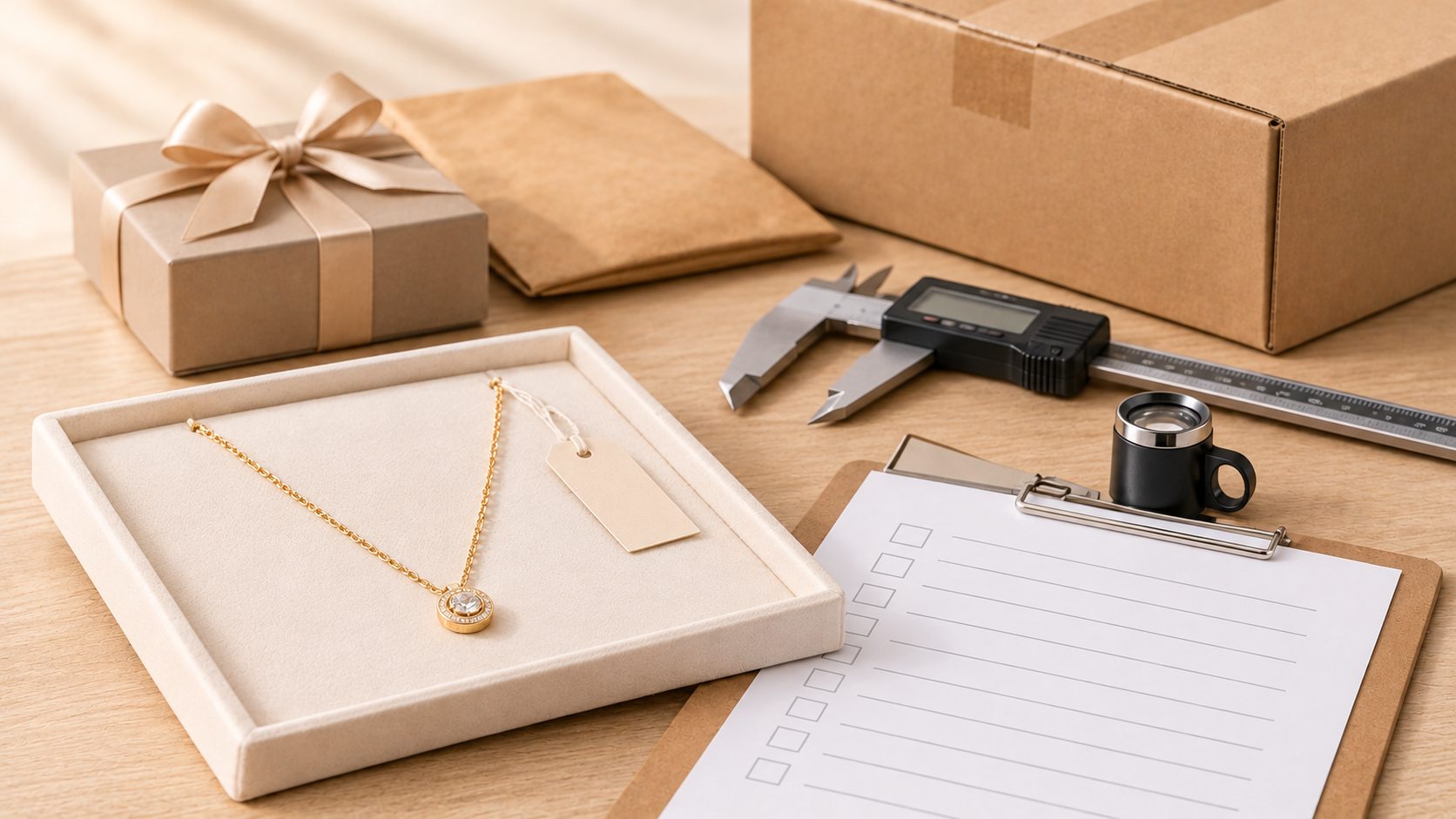 An approved sample plus a written specification turns a quotation into a budget you can trust.
Frequently Asked Questions
How much does custom jewelry cost per piece? It depends on base metal, plating, stones, MOQ and whether you pay tooling. Fashion jewelry in brass or stainless steel at moderate volume is far cheaper per piece than sterling silver at a small MOQ, so compare on a fixed specification rather than a generic range.
Why is there a minimum order quantity? Tooling and setup are fixed costs. MOQ spreads them across enough units to make the unit price workable; order too few and the per-piece cost rises sharply.
Do I get to keep the mould I paid for? Only if the contract says so. Tooling ownership is negotiable — put it in writing, along with whether the design is exclusive to your brand.
What is landed cost in jewelry sourcing? The full cost of getting goods to your door: product, freight, customs duties and taxes, insurance and handling overheads, not just the factory unit price.
Related Posts
7 Popular Bag Materials and How to Choose the Right One for Your Brand
OEM vs ODM vs White Label: Which Manufacturing Model Fits Your Brand Stage?